NVIDIA Cosmos 3: An Open Omni-Model for the Era of Physical AI
Most of what gets discussed about artificial intelligence is about text: models that read, write, and respond. In 2025, NVIDIA introduced a proposal of a different nature. According to the company, Cosmos 3 is an open "omni-model" for physical AI — a system that not only talks about the world, but reasons about it in three dimensions, simulates how it behaves, and generates actions to act upon it. It is a shift of object: from the paragraph to space.
It is worth understanding what that means before measuring the impact.
What Sets Physical AI Apart from a Language Model
A language model learns patterns in text. It knows that "the glass fell" usually comes before "it broke," but it has no physical notion of gravity, friction, or how much the glass weighs. To write an email, that is enough. To move a robotic arm on an assembly line, it is not.
Physical AI, in NVIDIA's description, starts from the premise that an agent acting in the real world needs to understand the rules of that world. Cosmos 3 brings together three capabilities in one architecture: visual reasoning (interpreting what the camera sees), world simulation (predicting what happens next), and action generation (deciding the next move). The term "omni-model" describes this combination — a model that covers all three stages instead of requiring three separate systems.
The Cases NVIDIA Attributes to Cosmos 3
NVIDIA cites concrete examples of application. One is the generation of synthetic surgical training video: realistic images of procedures, created to train vision systems without relying exclusively on real patient recordings — a field where real data is scarce and sensitive.
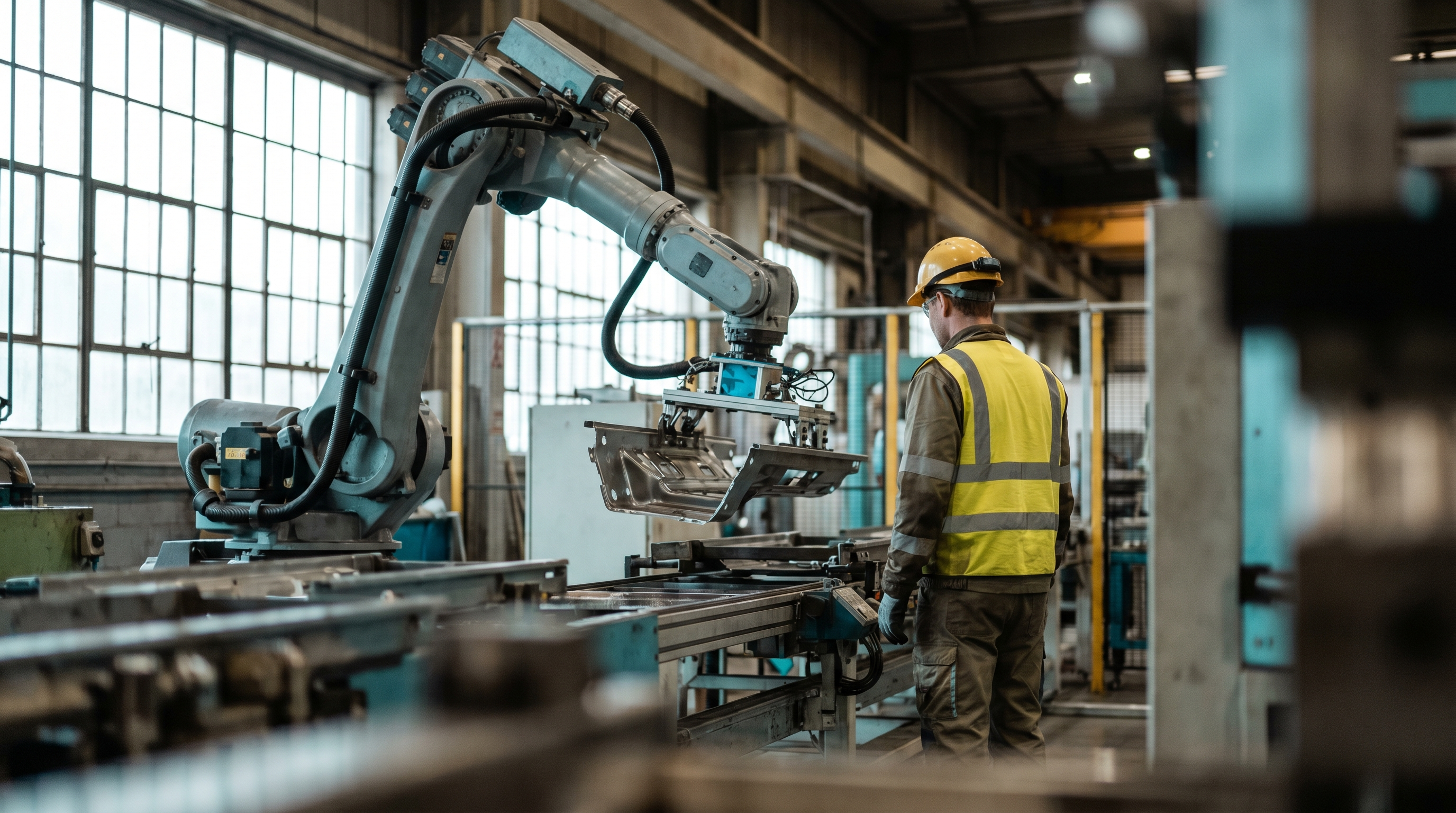
Another is the coordination of industrial robots, in which the model simulates the factory environment and helps multiple robots operate in sync.
The most specific case cited by the company involves Foxconn. According to NVIDIA, the MoMClaw system supported by the technology reduced root-cause analysis time by 80% — the work of figuring out why a production defect occurred. The number is NVIDIA's, attributed to the Foxconn case; we record it as reported by the company, not as a measurement of our own.
Why "Open" Matters
NVIDIA makes Cosmos 3 available as an open model. That has a practical consequence. A closed model forces the company to send operational data — shop-floor images, plant layout, processes — to a third party's server. An open model can run on the company's own infrastructure, under its control.
For industry, mining, and agribusiness, where operational data is a strategic asset and field connectivity is unstable, the difference between depending on an external cloud and running locally stops being a technical detail. Open also means engineering teams can inspect, adapt, and build on top — instead of accepting a closed box.
What This Could Mean in Brazil
Brazil has three fronts where physical AI meets a real problem, not a laboratory hypothesis.
In agribusiness, autonomous machines and vision systems for harvesting, spraying, and crop monitoring operate in open, variable environments. In agriculture, simulating a scenario before the real operation saves fuel, inputs, and risk.
In mining, a sector where Brazil is a global heavyweight, robots and autonomous vehicles operate in environments that are dangerous for humans. Coordination and prior simulation have direct safety value.
In manufacturing, the Foxconn case cited by NVIDIA points the way: defect analysis and quality control assisted by a model that understands the physical scene of the line.
None of this is automatic. An open model is raw material, not a finished solution — it takes engineering to integrate with sensors, systems, and the context of each operation.
The 10Dobro Read
It is precisely in that gap between model and operation that we work. NVIDIA's open technology does not replace the team that knows the shop floor, the field, or the mine — it multiplies what that team already knows how to do, when someone bridges the model and the concrete problem.
Physical AI broadens the terrain: AI engineering starts to touch machines, safety, and production, not just screens. We hold to the same standard as always — deliver what can be verified, give credit to those who operate, and treat every third-party number as what it is: reported by the source, in this case NVIDIA, and not a promise of ours.
Got an AI, video, or growth project?
Talk to us →